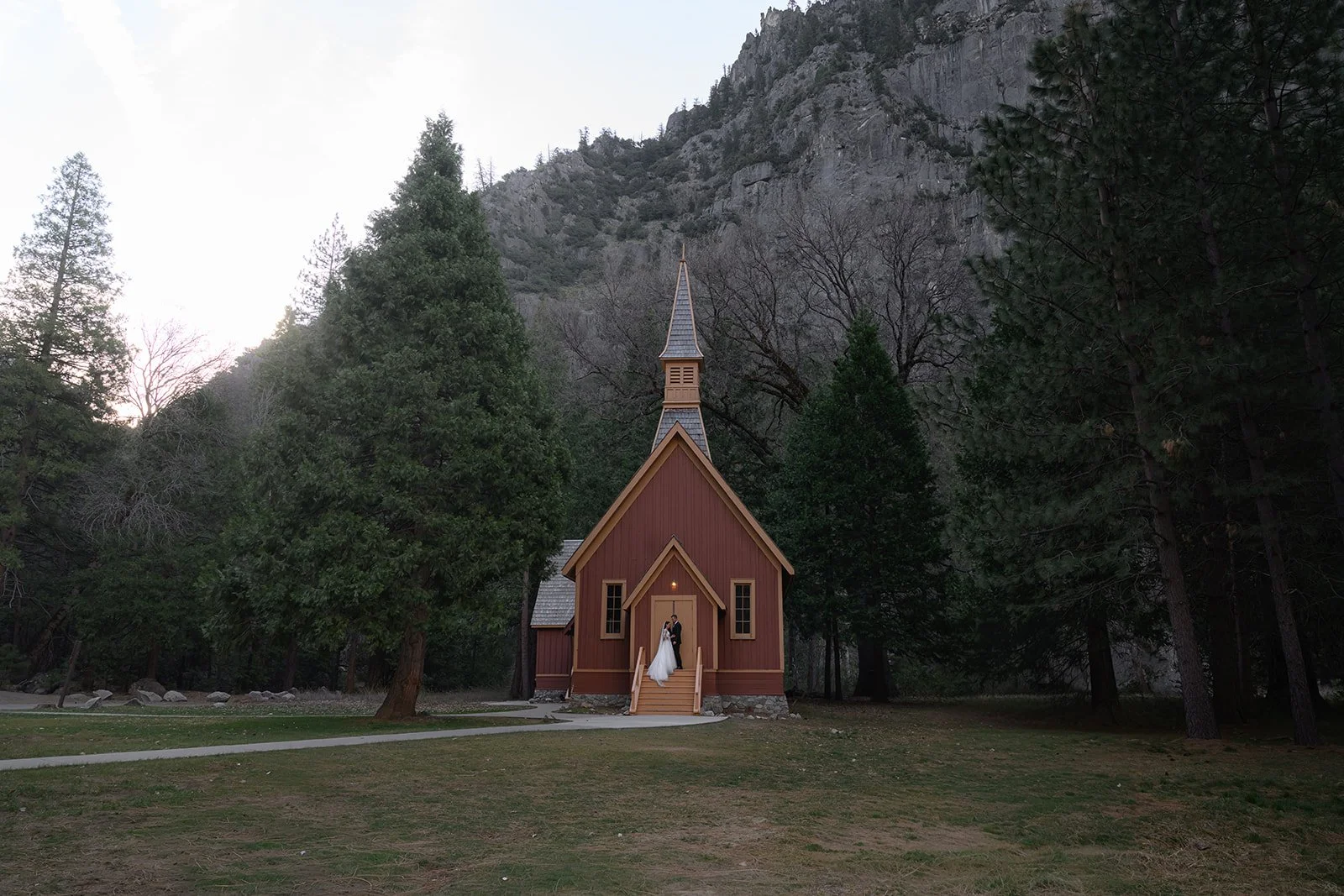
Plan your Yosemite elopement in this order: pick your season, pick the feeling you want, book your photographer, choose a ceremony location from the park's approved list, apply for your special use permit (it costs $150 and has to be submitted more than 21 days before your date, and never for a holiday weekend), get a California marriage license in person at the county clerk, book lodging early, hire your officiant and any other vendors, build a timeline around sunrise, pack for a park that spans 4,000 to 8,600 feet, and make a weather backup plan. Yosemite is not requiring vehicle reservations in 2026, which makes timing easier than it has been in years.
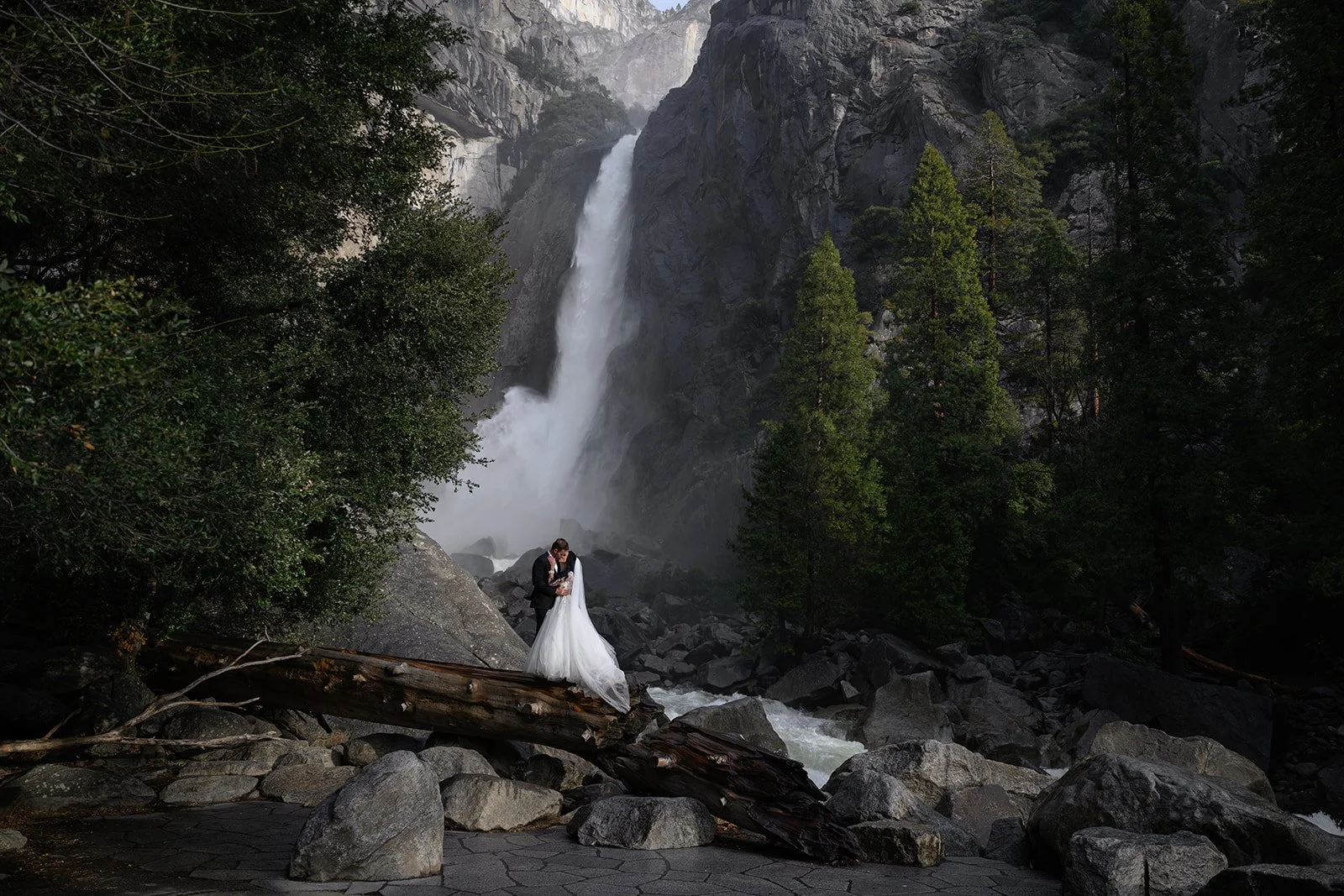
Before the Steps: What Makes Yosemite Different
Yosemite is one of the most photographed places on earth, and it's also a park with real rules, real crowds and real logistics. The couples who have the best days aren't the ones who plan the hardest. They're the ones who plan in the right order.
Most people start by picking a location off Instagram. That's backwards. Locations comes later, after you know your season, your feeling and your photographer, because half the ceremony sites in this park are closed for part of the year and the rest have group limits that will decide things for you.
So here is the whole thing in order.
Step 1: Pick Your Season
This is the first decision because it eliminates or unlocks everything else.
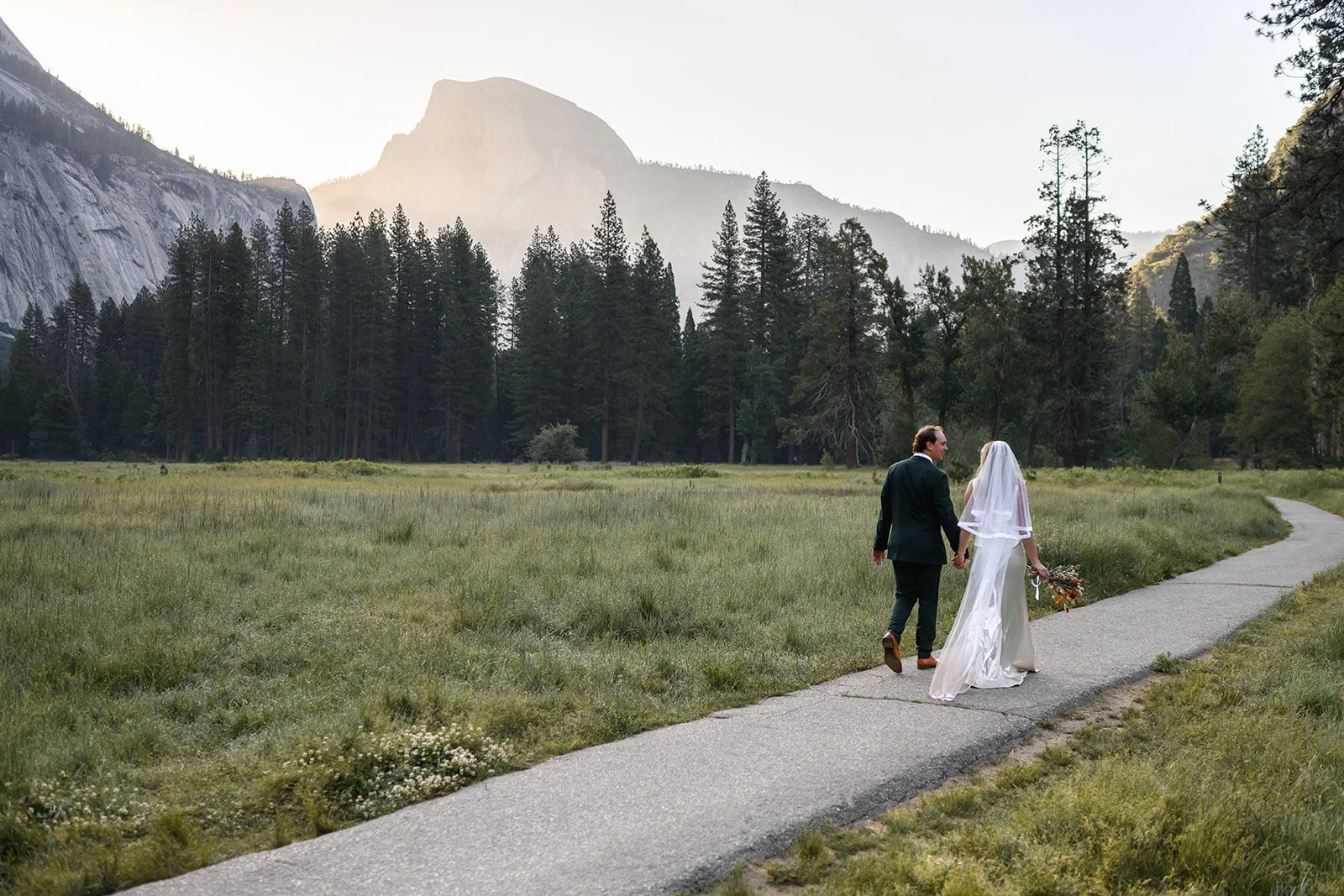
Late spring, May and June. The waterfalls are at full roar and the meadows are green. This is peak Yosemite and peak crowds. Glacier Point Road and Tioga Road are usually opening in this window, which means the high country starts becoming available.
Summer, July and August. Hot, busy, and the falls are often dry by August.
Fall, September and October. My favorite. Golden light, thinner crowds after Labor Day, warm days and cold mornings. The high country is still open into late September.
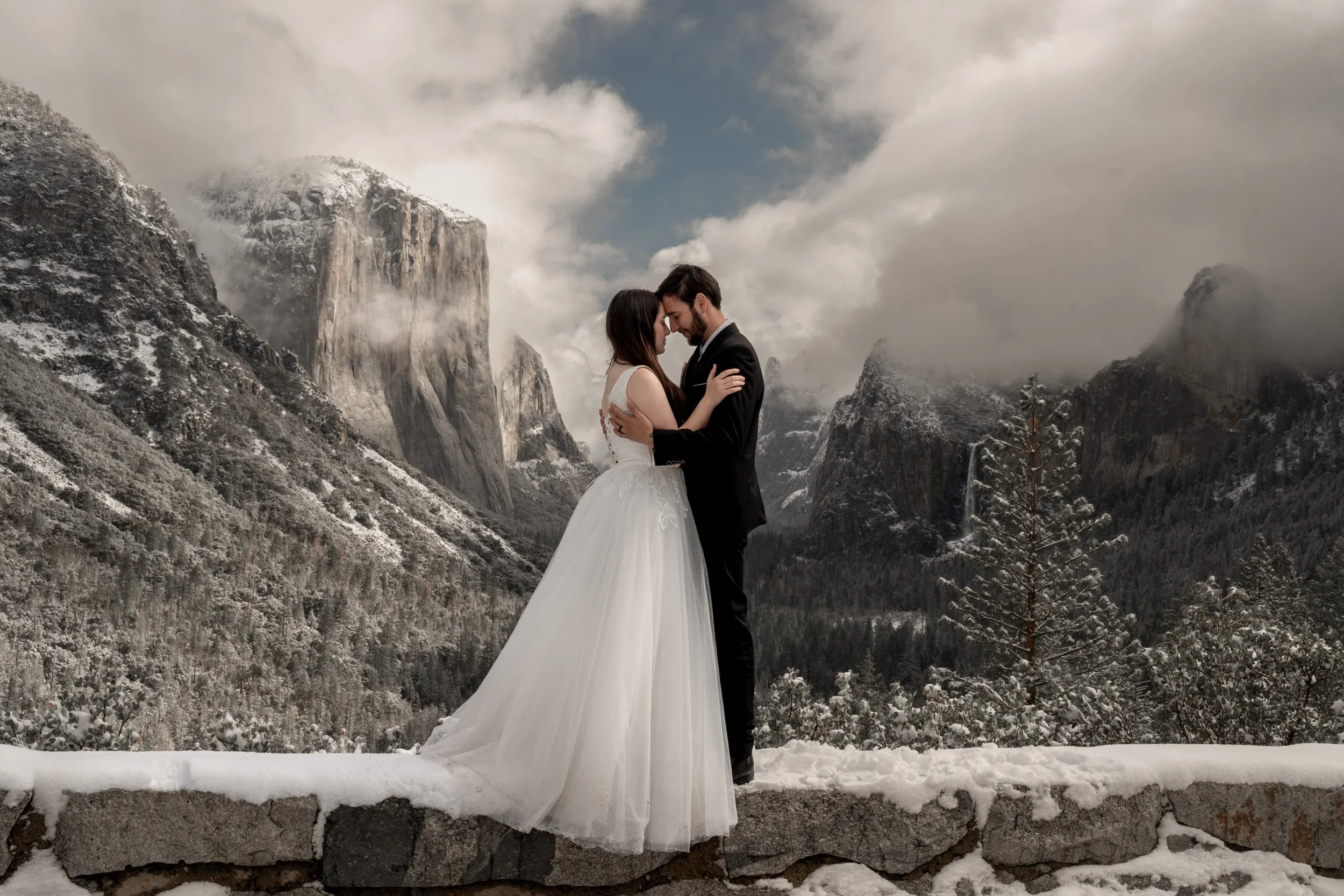
Winter, November through April. Quiet, dramatic and cheap. Snow on granite, Yosemite Falls running again in late winter, and the Valley almost to yourselves some mornings. Tioga Road and Glacier Point Road are closed, so your options narrow to the Valley floor, and chains can be required. If this appeals to you, I've written a full guide to eloping in Yosemite in winter.
One practical note for 2026: Yosemite announced it will not require vehicle reservations this year. The park is managing congestion with real time traffic monitoring and parking management instead. That's a gift for planning, and it also means weekends and holidays will be busy, so weekdays are worth choosing on purpose.
Step 2: Decide What Kind of Day You Want
Before locations, before anything, sit down together and answer these.
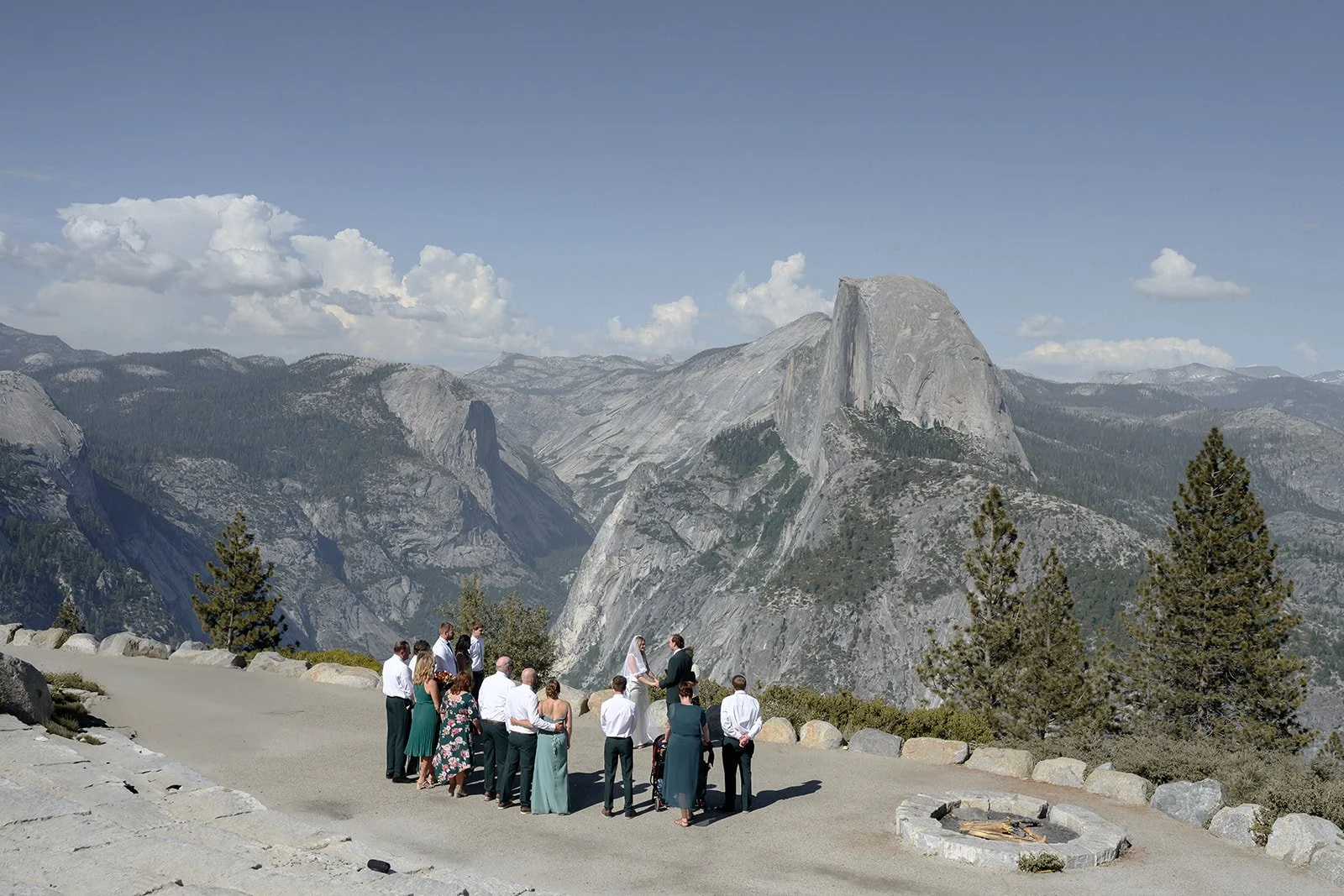
Just the two of you, or people there? This single answer changes your location list, because group limits range from 20 people to 100.
Sunrise or sunset? Sunrise means an alarm in the dark, empty viewpoints and the best light of the day. Sunset means a more humane morning and more company. I recommend sunrise to almost everyone in this park.
Adventurous or relaxed? A hike to a grove of sequoias and a full day out, or a short walk from the car, a picnic and a nap. Both are great. Be honest about which one you actually are.
How many days? A lot of my couples turn this into two or three days: ceremony one morning, adventure the next, dinner and portraits in between. It takes the pressure off any single sunrise.
Step 3: Book Your Photographer
I'd say this even if it weren't my job, and here's why: in a park like this, your photographer is also your planner.
I know which trailheads have eight parking spots, which ceremony sites close at dusk, which ones require a monitor, when the light hits the granite, how long the drive from the Valley to Glacier Point actually takes, and what we do instead if the road is closed. Yosemite dates go early, especially fall weekends, so this is a thing to lock in first and build around.
Once you're booked, everything after this step is something we do together.
Step 4: Choose Your Ceremony Location
You cannot get married anywhere you want in Yosemite. The park has a specific list of approved ceremony sites, each with a maximum group size and a season. Here's the whole list.
In Yosemite Valley
Cascades Picnic Area, up to 30 people, year round. West of the Valley on El Portal Road, parking for about eight vehicles.
Lower Yosemite Fall paved trail, up to 50 people, year round except holiday weekends. Easy paved access from Yosemite Valley Lodge, and a monitor is required at 50.
Swinging Bridge Picnic Area, up to 20 people, year round except holiday weekends. On the beach northeast of the bridge, with very limited parking.
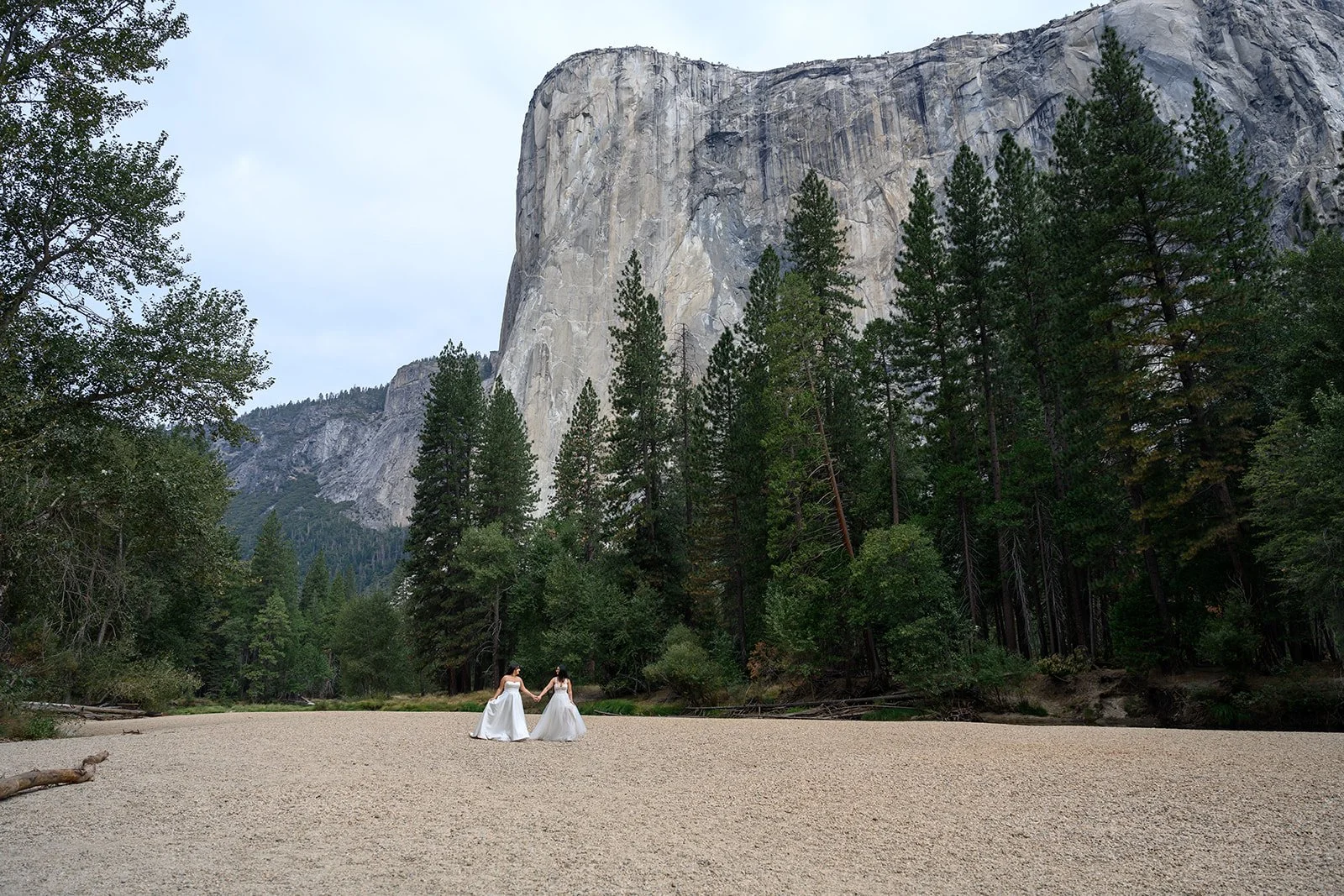
Cathedral Beach Picnic Area, up to 50 people, after Memorial Day through October. Closes at dusk, parking for six vehicles, monitor required for 35 or more. I have a whole post on why Cathedral Beach is perfect for intimate Yosemite weddings.
Sentinel Beach Picnic Area, up to 100 people, after Memorial Day through October. The largest capacity in the park. Closes at dusk, parking for eight vehicles, monitor required at 50 and up.
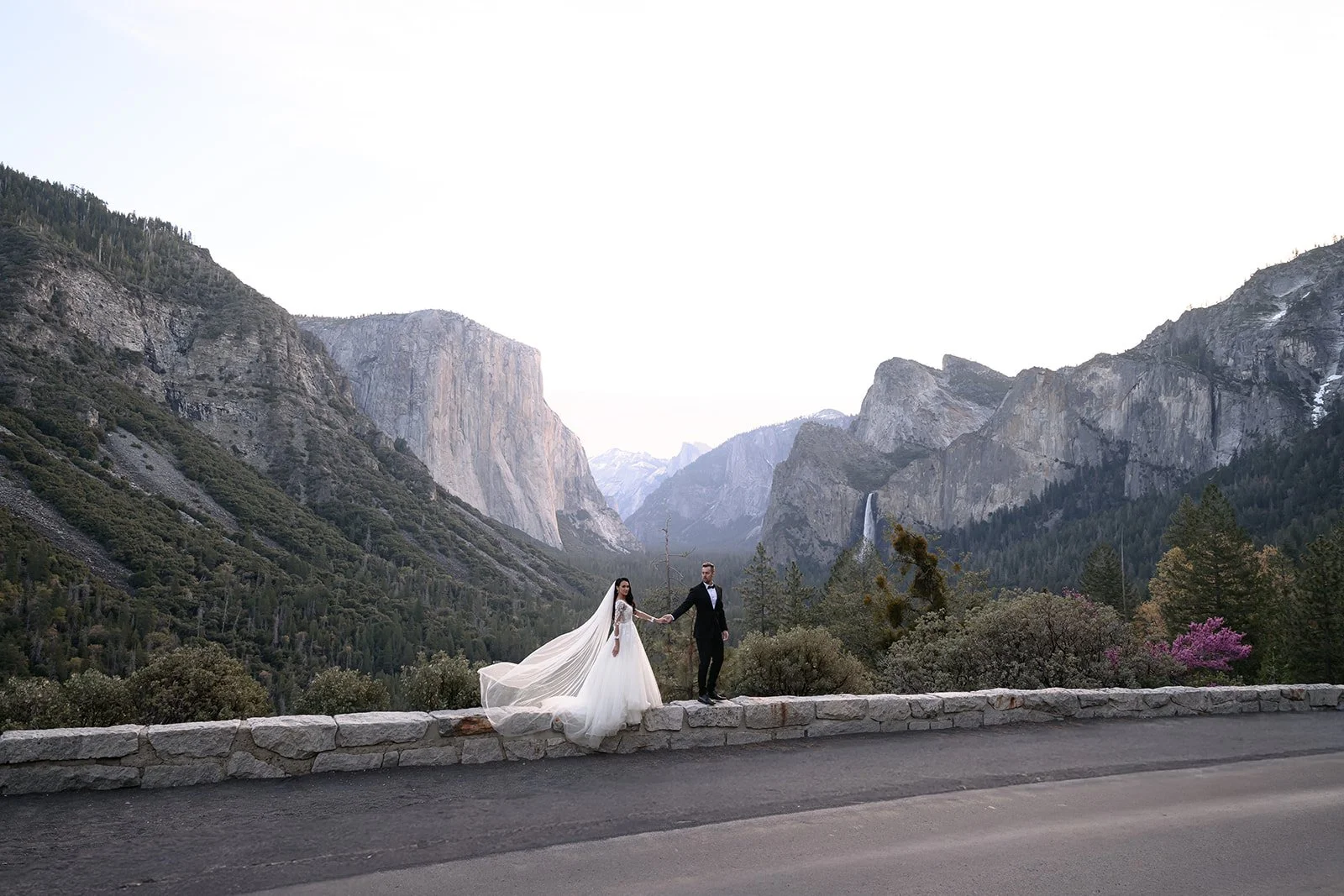
Bridalveil Fall, up to 50 people, year round. Paved path from the parking lot, monitor required at 50.
Glacier Point and Wawona
Glacier Point Amphitheater, up to 50 people, after Memorial Day through June and then in September. No weddings here in July or August, and the road closes seasonally. Elevation 7,214 feet.
Chilnualna Falls trailhead parking area, up to 50 people, seasonal depending on the road. Maximum ten vehicles.
Tuolumne Meadows
Tenaya Lake Beach, up to 50 people, from the Tioga Road opening through September 30. Elevation 8,150 feet, and there can still be snow when the road opens.
Tuolumne Meadows Lodge area, up to 25 people, road opening through September 30. Elevation 8,600 feet, on the granite slab upstream on the Dana Fork, with limited parking and required carpooling.
Big Oak Flat
Tuolumne Grove, up to 30 people. A 2.5 mile round trip on a paved path with a 400 foot elevation change, ceremony on the footpath only. Snow possible late October into June.
Merced Grove, up to 30 people. A 3 mile round trip, easy to moderate, with a 600 foot elevation change, ceremony on the footpath only. Snow possible late October into June.
Two things to notice. First, the giant sequoia groves require a real walk in your wedding clothes, which is wonderful if that's your thing and miserable if it isn't. Second, parking is the hidden limiter at nearly every one of these sites. A twenty person ceremony with twenty cars does not work.
If you want my opinions rather than the park's list, I ranked the best Yosemite elopement locations and wrote separately about the best sunrise spots.
Step 5: Apply for Your Wedding Permit
Every wedding and commitment ceremony in Yosemite requires a special use permit, anywhere in the park, at any group size.
What it costs. A $150 nonrefundable application fee. Outdoor ceremonies with 30 or more people are also charged $50 per hour for an event monitor. Entrance fees are not waived for you or your guests.
When to apply. You can schedule up to a year in advance, and your application has to be in more than 21 days before your date. Apply early for fall and late spring dates.
What the park will not do. Permits are not issued on holidays or holiday weekends. Don't build a plan around Memorial Day, the Fourth of July or Labor Day weekend.
How to apply. Yosemite still wants the original paper application mailed in with a check or money order, to the Special Park Uses office in El Portal. The application asks for a Social Security number for one of you. I walk my couples through this form every time.
The rules that come with it.
Two hour maximum for the ceremony
No amplified music or PA systems, with a 60 decibel limit
No balloons, arches or formal decorations
Nothing released or thrown: no rice, birdseed, petals or butterflies
No chairs or tables beyond the picnic furniture already there
No drones
No pets at ceremony sites
Handheld bouquets and boutonnieres are fine
Early morning, before 10am, is what the park itself recommends, which lines up exactly with what I'd tell you anyway.
Step 6: Get Your California Marriage License
The permit lets you have a ceremony. The license is what actually makes you married. They are two completely separate things and couples mix them up constantly.
Where. Any California county clerk. Yosemite Valley sits in Mariposa County, and the Mariposa clerk's office is the most convenient for most couples. A license from any county works anywhere in California, but you file it back in the county that issued it, so matching them is simpler.
What it costs in Mariposa County. $60 cash for a public license, $65 cash for a confidential one.
Appointments are required. Call ahead. Both of you have to appear together in person with a photo ID that shows your date of birth.
How long it lasts. 90 days from the date of issue. There's no waiting period, so you can use it the same day. After the ceremony, the signed license has to be returned within ten days.
Public or confidential? A public license is a public record and requires at least one witness at the ceremony, with a maximum of two signing. A confidential license requires no witnesses at all, but you have to already be living together as spouses to qualify for one. If it's truly just the two of you and your officiant, this distinction matters a lot, so decide it before you're standing at the clerk's counter.
If you were recently divorced, bring your final dissolution document if it was finalized within the last 90 days.
Step 7: Book Lodging Early
Lodging inside the park sells out further ahead than almost anything else in your plan, and where you sleep determines how early you can realistically be at a sunrise ceremony.
Staying inside the park means you're fifteen minutes from your ceremony spot instead of an hour and a half. Staying in Mariposa, Groveland, Oakhurst or El Portal is cheaper and means a very early alarm. Both work. Just decide with your eyes open.
I've written about romantic Yosemite cabins with good light for getting ready photos, which matters more than people expect, since a dark room with one window makes getting ready photos hard. If you want a bigger property with room for family, AutoCamp Yosemite is a good option just outside the park.
Step 8: Hire Your Officiant and Anyone Else
Officiant. You can hire a local officiant, or have a friend or family member get ordained online and do it. The second option is free and, in my experience, makes for a better ceremony.
Hair and makeup. Book someone who is willing to come to you early, since a sunrise ceremony often means a 4am start.
Flowers. Handheld only, per the permit rules. Local florists in Mariposa and Oakhurst deliver, or you can pick up something the day before.
Food. No catering at ceremony sites. Plan a picnic you carry in, or dinner somewhere afterward.
Witnesses, if you're using a public license. Your photographer counts. I've signed plenty of licenses.
Step 9: Build the Timeline Around the Light
Once the location and the date are set, the day gets built backward from sunrise.
A typical Yosemite morning looks like this: alarm in the dark, hair and makeup, drive in while it's still black, arrive at the ceremony site before first light, ceremony as the sun starts hitting the granite above you, portraits for an hour while the light is still low and the park is still quiet, then breakfast somewhere by the time everyone else is arriving.
Then the day is yours. A hike, a nap, a swim in the Merced, a drive up Tioga Road, dinner, and stars after dark. My guide to including stargazing in your Yosemite elopement covers that last part, and my Yosemite elopement timeline ideas has sample schedules you can borrow from.
If crowds are your main worry, read how to avoid crowds when eloping in Yosemite. The short version is sunrise and weekdays.
Step 10: Pack for a Park With 4,500 Feet of Vertical
Yosemite Valley sits around 4,000 feet. Tuolumne Meadows is at 8,600. The temperature difference between them on the same afternoon can be twenty degrees, and mornings in the Valley are cold even in July.
Layers you can hide under a jacket until the last second
Real shoes for the walk, nice shoes in the bag
Hand warmers for a sunrise ceremony, honestly any month
Water, more than you think
Bug spray in spring and early summer, when the meadows are damp
Chains in winter, required on many roads
A blanket for the car, because granite dust and river sand get everywhere
Your permit, printed, in hand
Your marriage license, and a pen
Step 11: Make the Backup Plan
Every plan I build has a second version, because this park closes roads.
Tioga Road and Glacier Point Road are closed all winter and can open late into summer. Storms close the Valley roads. Wildfire smoke is a real risk in late summer and early fall. Rockfall closes trails without warning.
So we pick a primary location and an alternate at a lower elevation, usually on the Valley floor, that works in almost any conditions. And if it rains, we shoot anyway. Wet granite is dark and dramatic, the waterfalls double, and the Valley empties out. Some of my favorite images from this park happened on days couples were dreading.
Step 12: Show Up and Be There
On the day, you should not be thinking about any of this.
You'll have a written timeline with drive times, a permit in the glovebox, a license in the bag, an alternate location if the weather turns, and a photographer who has already scouted your spot. That's the entire point of doing the work up front.
Your only job is to get married in one of the most beautiful places in the world and actually be present for it.
Frequently Asked Questions
Do you need a permit to elope in Yosemite?
Yes. A special use permit is required for every wedding or commitment ceremony anywhere in Yosemite, regardless of group size. The application fee is $150 and it's nonrefundable. Applications can be submitted up to a year ahead and must be in more than 21 days before your date. Permits are not issued on holidays or holiday weekends.
Where can you get married in Yosemite?
Only at the park's approved ceremony locations. In Yosemite Valley those are the Cascades Picnic Area, the Lower Yosemite Fall paved trail, Swinging Bridge, Cathedral Beach, Sentinel Beach and Bridalveil Fall. Elsewhere in the park there's the Glacier Point Amphitheater, the Chilnualna Falls trailhead, Tenaya Lake Beach, the Tuolumne Meadows Lodge area, and the Tuolumne and Merced sequoia groves. Each has its own group limit and season.
How many guests can you have at a Yosemite wedding?
It depends on the site. Swinging Bridge allows 20, Cascades and the sequoia groves 30, Tuolumne Meadows Lodge 25, and most other locations 50. Sentinel Beach is the largest at 100. Outdoor ceremonies with 30 or more people are charged a $50 per hour monitoring fee.
Do you need a reservation to enter Yosemite in 2026?
No. Yosemite announced it will not require vehicle reservations for 2026, and is managing congestion with traffic monitoring and parking management instead. Weekends and holidays will still be crowded, so weekdays and early mornings are worth planning around.
How do you get a marriage license for a Yosemite elopement?
Both of you appear in person, by appointment, at a California county clerk's office. Mariposa County is the closest to Yosemite Valley, where a public license is $60 cash and a confidential one is $65. The license is valid for 90 days with no waiting period, and it's returned within ten days after the ceremony. A public license requires at least one witness, and a confidential license requires none but is only available to couples already living together.
What is the best time of day to elope in Yosemite?
Sunrise. The park itself recommends ceremonies before 10am, and it's also when the light on the granite is best and the popular spots are nearly empty. Sunset is a good second choice, and the hour after sunset is worth staying for.
More Yosemite Planning Guides
Your Love. Your Story. Your Way.
Twelve steps sounds like a lot. In practice, you make a few decisions about what you want, and I handle the rest: the permit form, the location that fits your group, the sunrise math, the backup plan, the timeline with drive times written on it.
Reach out here and tell me what you're picturing, and we'll start at step one together.