
Adventure Elopement: What It Is and How to Plan One (2026 Guide)
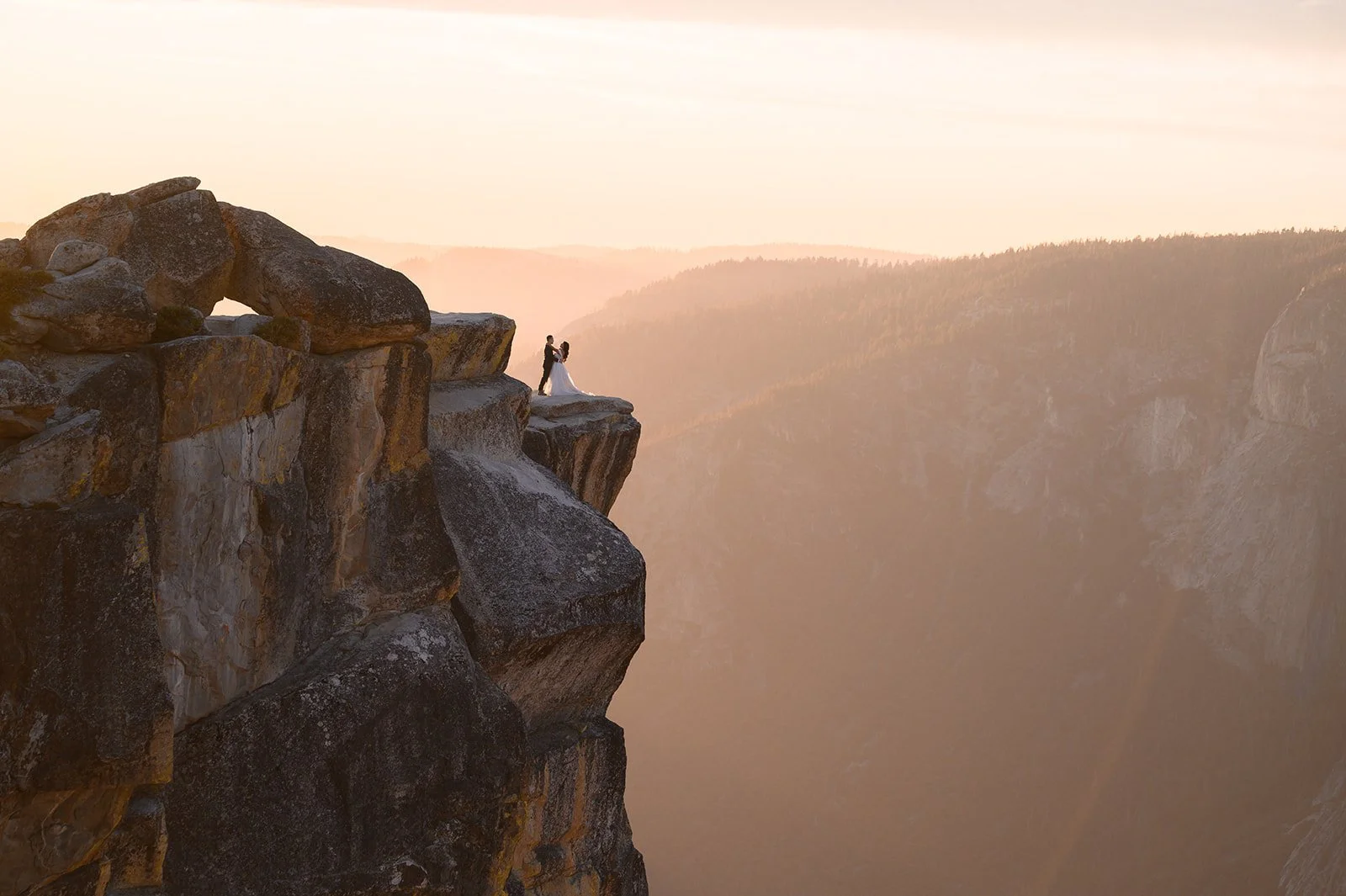
If you’ve been dreaming of skipping the big reception for 150 guests and instead saying your vows on a mountaintop, a foggy coastline, or deep in an old growth forest, you’re picturing an adventure elopement, and you’ll want an adventure elopement photographer who knows how to plan and capture a day like that. This guide walks you through what an adventure elopement actually is, what it costs in 2026, how to choose your location, and every step to plan a day that feels completely like you.
What is an adventure elopement?
An adventure elopement is an intimate wedding where you exchange vows in a wild or meaningful outdoor place, a summit, a beach, a desert, a redwood grove, usually with just the two of you or a small handful of your favorite people. It trades the ballroom and the seating chart for a hike, a road trip, or a sunrise, and centers the whole day on your experience together rather than on entertaining guests.
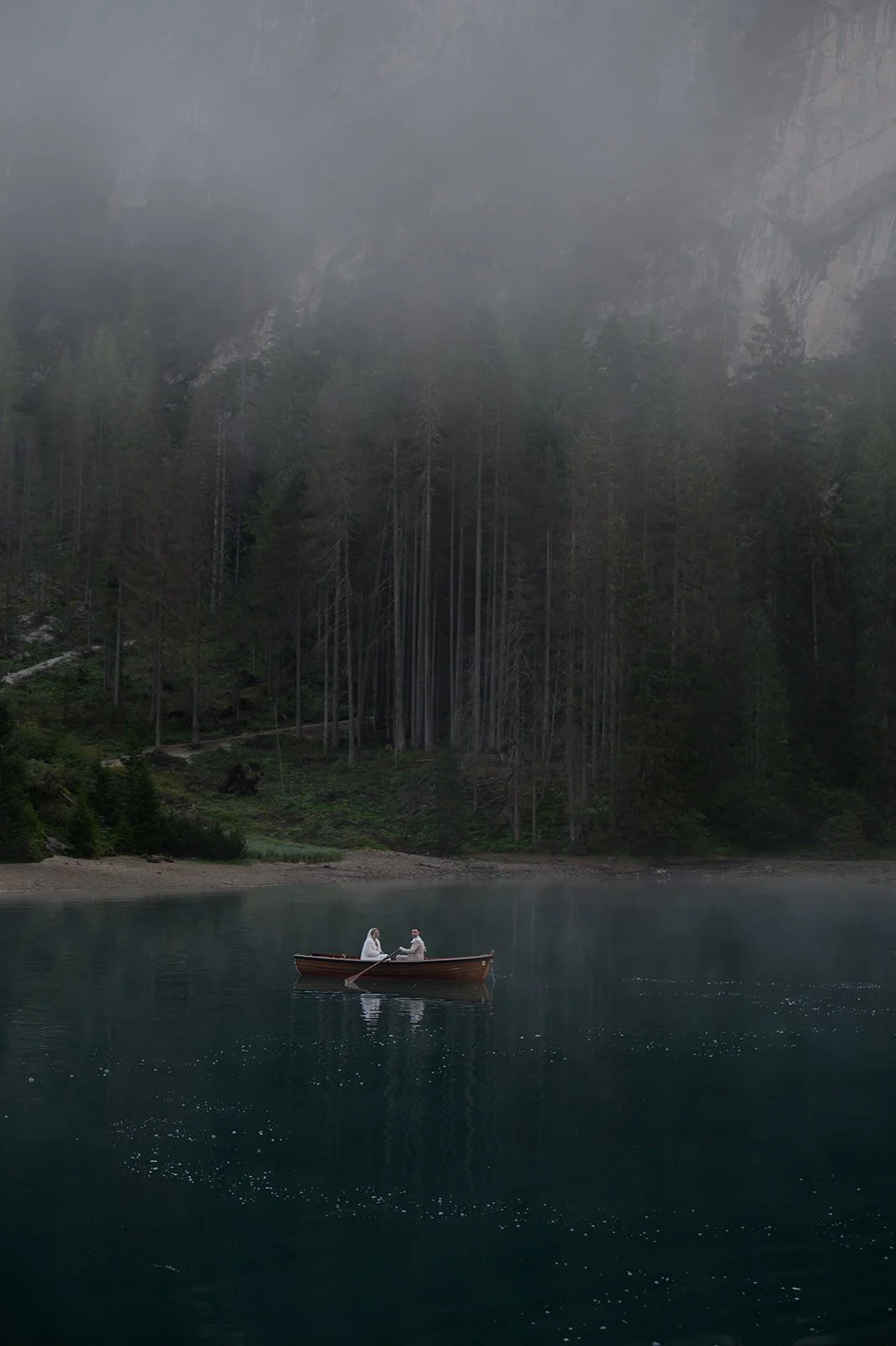
The word adventure doesn’t have to mean a 10 mile backcountry trek, though it can. It can be a short walk to a cliff’s edge, a golden hour paddle on an alpine lake, or a slow morning watching fog lift over the ocean. It can also simply mean running off somewhere new together and spending the afternoon on the beach with a cocktail in hand. The heart of it stays the same: an intentional, adventurous, deeply personal day in a place that means something to you.
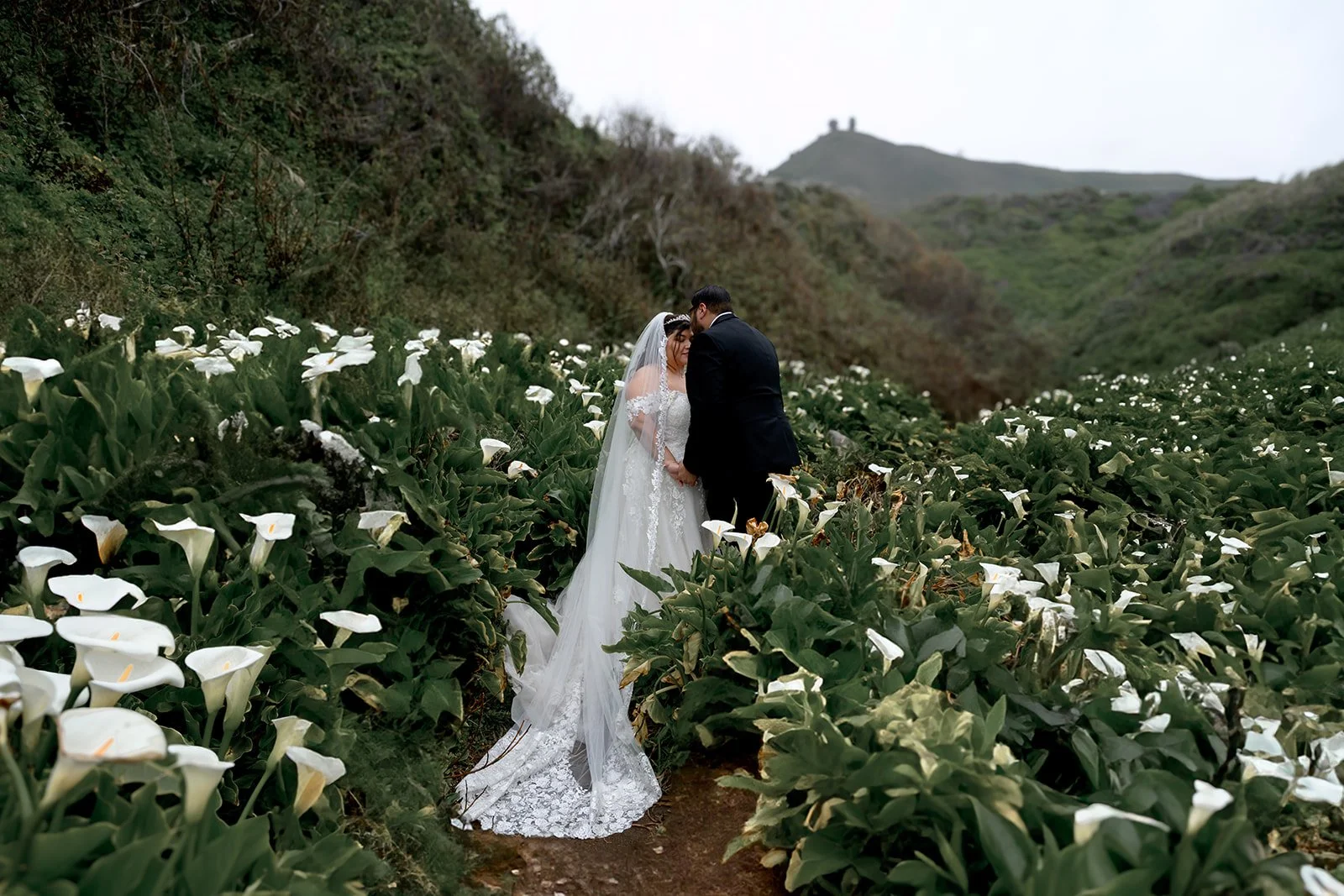
How is an adventure elopement different from a traditional wedding?
The biggest difference is where your attention goes. A traditional wedding is largely built around guests, the timeline, the venue, the meal, the flow of the reception. An adventure elopement is built around the two of you and the landscape. There’s no receiving line and no schedule dictated by a caterer, so the day feels slower, more present, and far more flexible.
That flexibility is the magic. You can chase the best light instead of a reception start time. You can move locations if you want to. And if the weather shifts, we adapt, because some of the most breathtaking photos happen in the fog, the rain, and the drama. Instead of hosting your day, you actually get to be in it.
How much does an adventure elopement cost in 2026?
Most adventure elopements cost between $5,000 and $15,000 all in, compared to the roughly $33,000 average U.S. wedding. That total typically covers photography, attire, a permit, travel and lodging, and a small celebration. Photography is usually the largest single line item, because your photos are the one part of the day you keep forever.
If you want something truly epic, it can run higher, often closer to $20,000 to $40,000 all in. At that level you’re adding luxury accommodations, once in a lifetime adventures like a helicopter to a remote glacier or alpine summit, a private chef, and travel to a faraway bucket list destination. The beauty of an elopement is where that money goes. Instead of feeding 120 guests and paying for a big venue, you might put it toward a helicopter landing on a mountaintop, a few nights in an unforgettable lodge, a longer multi day shoot across two or three locations, or a dream trip that doubles as your honeymoon.
How do you choose the right location?
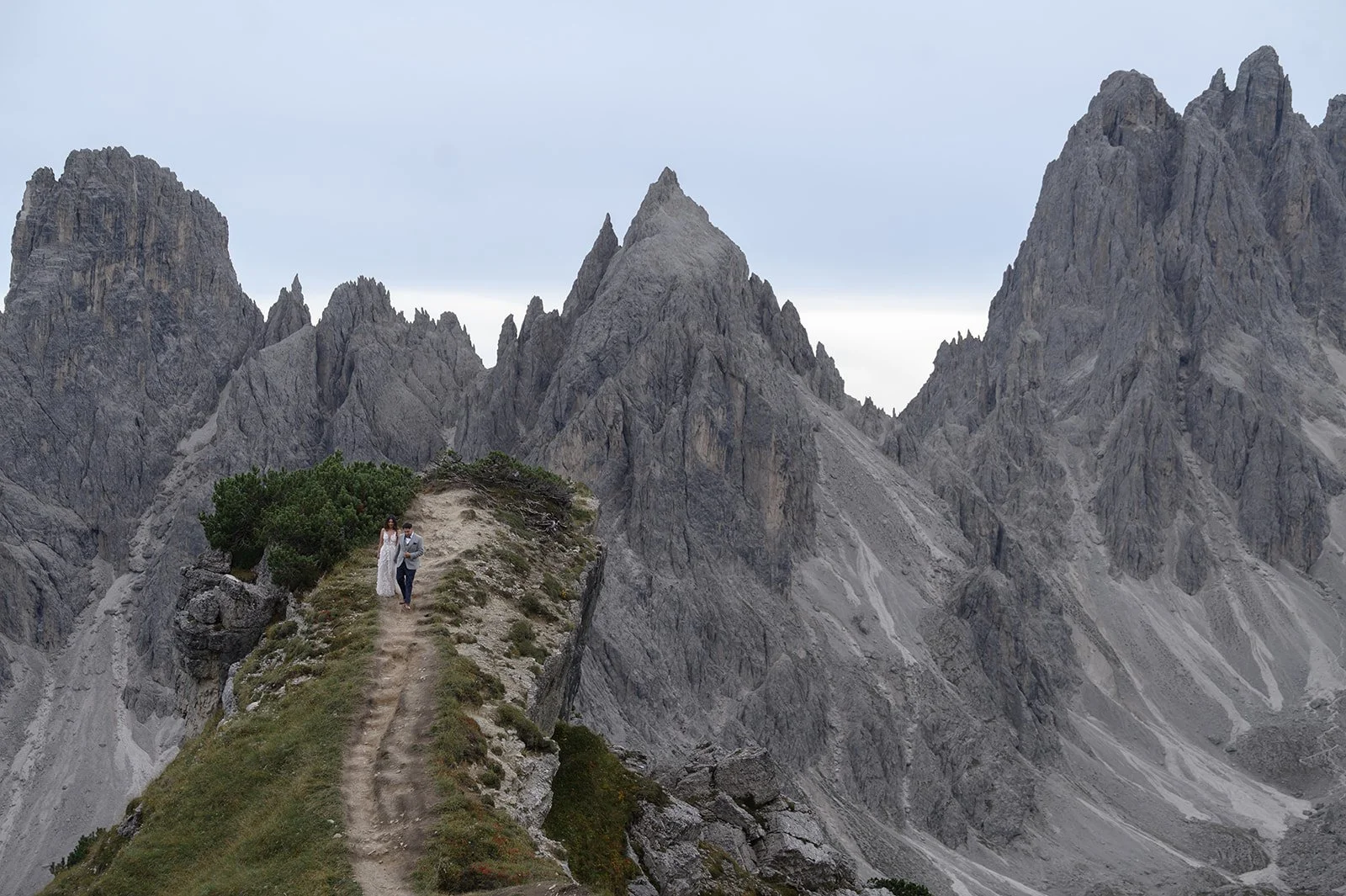
Start with the feeling you want, then match a landscape to it. Do you picture mountains and alpine lakes, dramatic coastline, red rock desert, or towering forest? From there, narrow by three practical filters: how far you’re willing to travel, what the weather and season do to that place, and whether it allows weddings, since most public lands require a permit.
Perfect if you want mountains: the Dolomites, Yosemite, the Eastern Sierra, or the Rockies.
Perfect if you want coastline: Big Sur, the Oregon coast, or Olympic National Park.
Perfect if you want desert drama: Utah’s national parks or Death Valley.
Perfect if you want forest and moss: the California and Oregon redwoods.
Perfect if you want waterfalls: Iceland, Norway, or the Faroe Islands.
Perfect if you want jungles: Thailand, Indonesia, or Hawaii.
Perfect if you want beaches: Hawaii, Thailand, or Big Sur.
Perfect if you want a far flung adventure: Switzerland, Japan, New Zealand, or Patagonia.
You really can’t go wrong, but the right location is the one that feels like you, not just the one that photographs well.
How to plan your adventure elopement, step by step
Choose your vibe and rough location. Mountains, coast, desert, or forest. Start there.
Pick your season and date. Consider weather, crowds, and peak light like wildflowers, fall color, or snow.
Book your photographer first. For elopements, your photographer often doubles as your planning guide and takes only one couple per day, so dates go quickly.
Secure permits and any lodging. Apply as early as the park allows.
Build a loose timeline. A sunrise or sunset ceremony, hike time, portraits, and a celebration meal, with built in buffer.
Plan attire for the terrain. Layers, real shoes for the hike, and a backup for weather.
Decide who, if anyone, comes. Just the two of you, or a few loved ones.
Write your vows and plan your details. Rings, flowers, a first look, a toast at the top.
Why work with an adventure elopement photographer, not just any photographer?
An adventure elopement photographer does far more than take pictures. They help you choose a location, understand permits, build a timeline around the best light, and know how to keep you safe and comfortable on a trail or a cliff. They’ve done this before, so on your actual day you get to relax and be present while someone who knows the landscape handles the details.
That’s the role I love most, being the person who makes an ambitious, adventurous day feel completely doable, and handing you back photos that feel exactly like how it felt to be there.
Frequently Asked Questions
What counts as an adventure elopement?
Any intimate outdoor wedding centered on the couple and a wild or meaningful landscape, from a short walk to a cliffside overlook to a full backcountry hike. It’s defined by intention and setting, not by difficulty.
How many people can come to an elopement?
Anywhere from just the two of you up to around 20 guests before it starts to feel like a small wedding. Many public lands cap ceremony group size, so check your location’s permit rules.
How far in advance should I book an adventure elopement photographer?
Ideally 8 to 14 months out for peak season and bucket list locations, since most elopement photographers take only one couple per day. Last minute is sometimes possible, so it’s always worth asking.
Can we still have a celebration if we elope?
Absolutely. Many couples add an intimate dinner, a small at home party later, or a welcome gathering. You could even keep the elopement just for the two of you and throw a full reception for everyone else once you’re back home, so you get both your intimate day and a big celebration. Eloping the ceremony doesn’t mean skipping the celebration.
Is it worth eloping instead of having a wedding?
If you value presence, adventure, and spending your budget on experience over hosting, an elopement is often more meaningful and less stressful. It’s not less than a wedding. It’s a different, intentional choice.
Dreaming of an adventure elopement of your own? I would love to help you plan it from the very first idea to the final sunset shot. Reach out here and let’s start dreaming up your day.
More guides I’ve written: How to Avoid Crowds When Eloping in Yosemite, 10 Stunning Redwood Wedding Venues, and my other California and destination elopement guides.